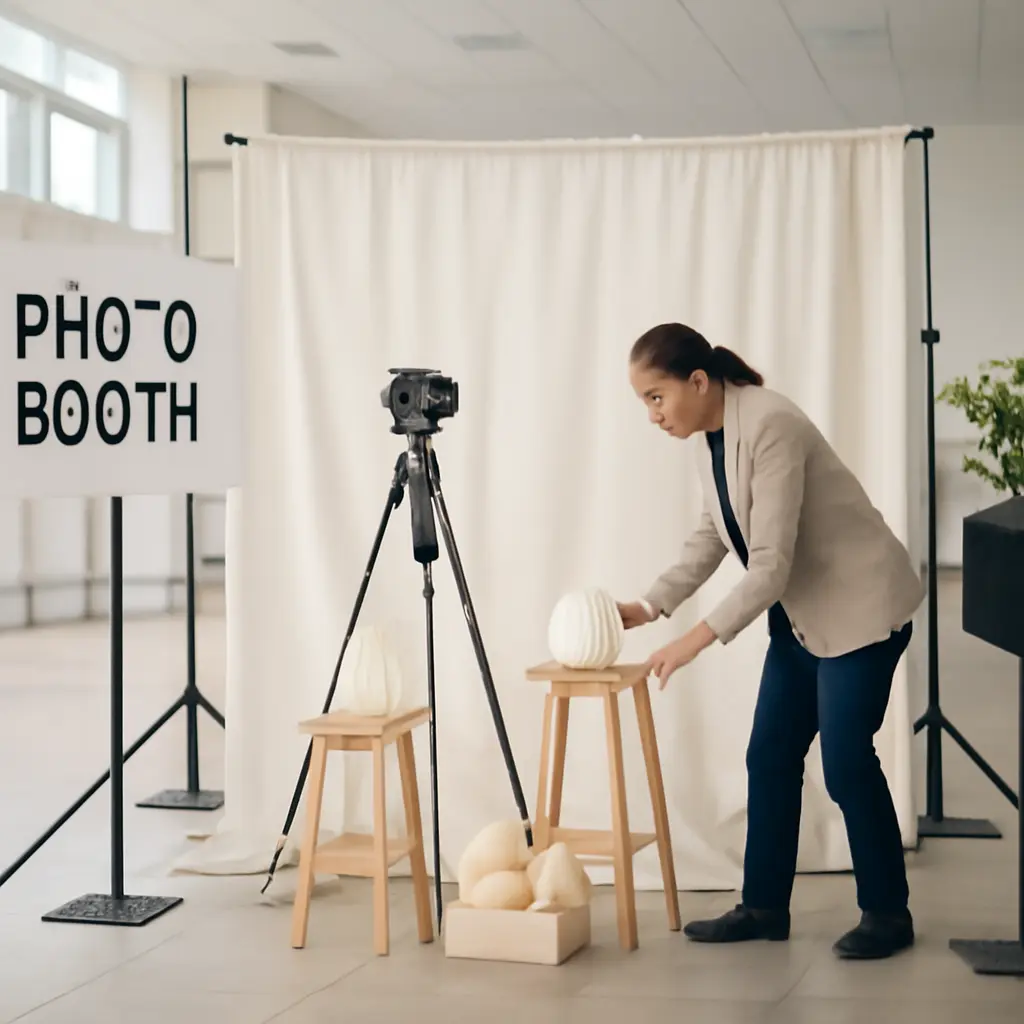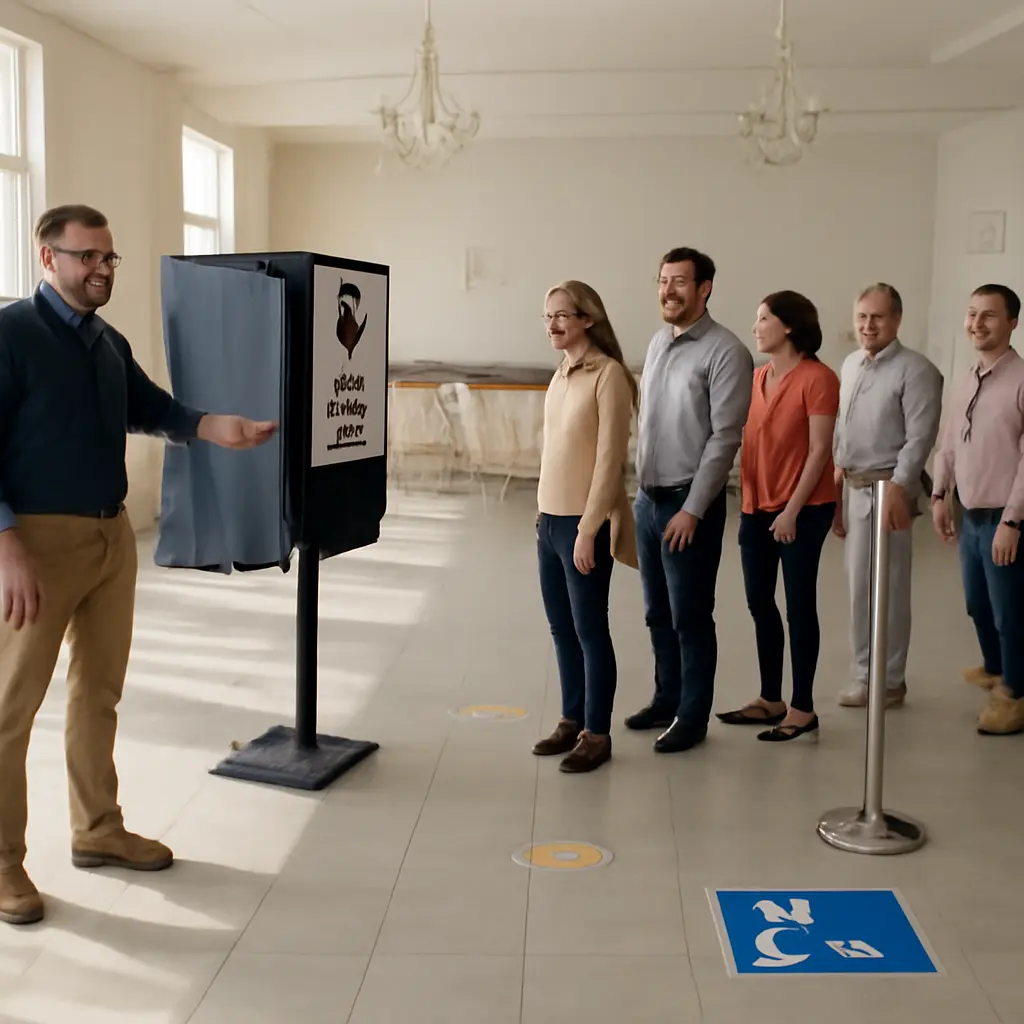
A booth line is the queue of guests waiting to use an event attraction, such as a photo booth, portrait station, or interactive activation. Managing booth lines well means reducing avoidable waiting, setting clear expectations, and keeping guests engaged without making the attraction feel rushed. That matters because waiting is part of the experience: a 2023 Queue-it survey found that 80% of consumers said a long wait would make them less likely to return to a business, while crowd-management guidance from the U.S. Occupational Safety and Health Administration emphasizes planning for pedestrian flow and avoiding congestion. The practical approach is to size capacity, design the queue, streamline each session, communicate wait times, and monitor the line as conditions change.
Queue management defines the booth-line experience
Queue management is the coordinated design and operation of a waiting line: how guests join it, how they move through it, what they understand while waiting, and how service is delivered at the end. The Institute of Customer Service describes queue management as an important part of the customer experience, because perceived fairness and communication influence how a wait feels—not just how long it lasts. For event booths, the goal is not always to eliminate a queue; it is to make waiting safe, predictable, and proportionate to the value of the activity.
A useful distinction is between actual wait time, perceived wait time, and service capacity. Actual wait is the elapsed time before a guest is served. Perceived wait is the guest’s judgment of that delay. Capacity is the number of guests the booth can serve within a given period. These concepts connect directly: a booth can improve perceived waiting with clear updates, but only adequate service capacity can sustainably reduce the actual wait.
Capacity and service time
Capacity is the booth’s service rate: the number of guest groups it can complete per hour. If a session averages three minutes, one attendant operating one station can theoretically serve up to 20 sessions per hour, before allowing for setup, questions, technical delays, or breaks. That is a planning ceiling, not a guaranteed throughput. For example, a 30-second reset after every session reduces the practical rate to about 17 sessions an hour.
Estimate capacity using the full guest cycle, including check-in, posing, capture, retakes, sharing, and reset. If a booth serves groups rather than individuals, measure how many guests fit into a typical group and whether every group expects multiple photos or prints. A timed rehearsal before doors open is more reliable than estimating from the camera’s capture speed alone.
Wait-time expectations
A wait-time estimate is an operational forecast that helps guests decide whether to join and helps staff spot a queue that is growing faster than it can be served. Use a simple calculation: people or groups ahead multiplied by average service time, adjusted for the number of active stations. If 12 groups are ahead, each session takes three minutes, and two stations are operating, the rough estimate is 18 minutes. Update it when the line changes or service slows.
Avoid promising an exact time when service varies. A range such as “about 15–20 minutes” is more credible, especially when a session includes custom poses or prints. The bridge from forecasting to guest experience is communication: an estimate only helps if guests can see it, hear it, or check it before committing to the line.
Queue design improves booth-line flow
Queue design is the physical and procedural arrangement that guides guests from arrival to service and exit. Its core characteristics are a visible entrance, an obvious direction of travel, enough standing space, and an exit that does not force served guests back through those waiting. The U.S. Occupational Safety and Health Administration’s crowd-management guidance recommends planning pedestrian movement, identifying potential bottlenecks, and keeping exit routes clear—principles that apply to event activations as well as larger gatherings.
Common queue types include a single serpentine line feeding one station, separate lines for multiple stations, appointment or time-slot queues, and virtual queues that let guests wait elsewhere. The right choice depends on floor space, staffing, session length, accessibility, and whether each station offers the same service. A single line can feel fairer when stations are interchangeable; separate lines can work when services differ, but guests may worry they chose the slower one.
Physical layout and accessibility
A booth queue should be easy to identify without blocking walkways, neighboring attractions, emergency access, or the booth’s own exit. Use stanchions, floor markers, or furniture to define the route, and leave turning and maneuvering space for wheelchair users. The U.S. Access Board’s accessibility standards address clear floor space and accessible routes; event organizers should apply the relevant requirements to the venue and setup rather than treating accessibility as an afterthought.
Keep the queue away from cables, light stands, equipment cases, and photo backdrops that guests might step into. Position the entrance where staff can see it, and make the exit distinct from the entry. For a compact footprint, a short, clearly marked switchback is usually easier to manage than a loose crowd gathering around the camera.
Single-line, multi-station, and timed-entry models
A single-line, multiple-server model sends guests to the next available station. It helps reduce the frustration of choosing a slower line when stations provide equivalent service. Separate lines make sense when one station offers a different package or experience, but signs should explain the difference before guests join.
Timed entry or reservations can distribute demand across an event, particularly when attendance arrives in waves. A virtual queue can also let guests explore the venue while keeping their place, but it needs a dependable notification method and a clear rule for missed turns. These options do not remove the need for capacity planning: they shift when and where guests wait, so the operator still needs enough staff and stations to serve the scheduled demand.
Service design reduces avoidable waiting
Service design is the way a booth experience is structured from the guest’s first decision through completion. It reduces waiting by removing unnecessary steps, making choices before the guest reaches the camera, and keeping the service process consistent. The U.S. General Services Administration’s customer-experience guidance treats customer needs and service outcomes as central to designing a process; event teams can apply the same principle by testing the guest journey from the line’s entrance to the final photo or product.
Pre-arrival choices and clear instructions
Pre-arrival information is any instruction or decision a guest can complete before reaching the service point. Put options such as print size, digital delivery, or backdrop choice on a sign near the queue entrance, and keep the menu short enough to scan quickly. A sample image, a one-sentence explanation, and a QR code for optional details can prevent long conversations at the camera without requiring guests to use a phone.
Instructions should also clarify how many people can participate, whether retakes are included, and how digital images are delivered. If the booth is sponsored or collects personal information, explain what is optional and what data is collected before guests enter the service area. Clear expectations protect both throughput and trust.
Session pacing and operational roles
Session pacing is the deliberate control of time spent on each stage without making guests feel hurried. A host can welcome the next group, confirm their choices, and guide posing while an operator manages the camera and equipment. For a high-demand booth, a third staff member can manage the queue, answer questions, and communicate wait estimates. Separate roles reduce interruptions to the person operating the station.
Set a realistic session target based on a rehearsal, then use a friendly cue to keep the experience moving—for example, “Let’s get one group shot and one fun pose.” Do not rely on staff to rush every guest when the line grows; first check whether choices, retakes, technical steps, or staffing are creating unnecessary delay. The next step is to make the wait feel worthwhile while preserving the same flow for everyone.
Guest communication makes waiting feel manageable
Guest communication is the information and interaction that help people understand the queue, the expected delay, and what happens next. It includes signs, verbal updates, digital displays, and staff conduct. Queue research commonly distinguishes perceived waiting from clock time: uncertainty, lack of information, and feeling that others are being favored can make a wait feel worse. Communication cannot compensate for a dangerously long line, but it can reduce uncertainty and prevent avoidable conflict.
Visible wait updates and fair order
A visible wait update gives guests a practical basis for deciding whether to join. Display a time range, the number of groups ahead, or a “check back in” estimate, and refresh it when conditions change. Staff should use the same estimate as the sign so guests do not receive conflicting information.
Fairness means applying a clear service order consistently, while accommodating access needs and any announced priority arrangements. Explain how the line works, including whether groups may leave and return, how late arrivals are handled, and whether reserved slots take precedence. Do not create informal exceptions that are invisible to waiting guests; transparent rules reduce disputes and help staff enforce them calmly.
Engagement, comfort, and choice
Queue engagement is a relevant, optional activity that gives guests something useful or enjoyable to do while waiting. Examples include previewing poses, viewing sample outputs, choosing a prop, or watching a short demonstration. Keep activities outside the main walking route and avoid anything that slows the next group’s service.
Comfort also affects the experience. Consider seating where appropriate, shade or weather protection for outdoor events, water access, and a quieter option for guests who find crowded spaces difficult. If the estimate becomes too long, offer a meaningful alternative: a return-time suggestion, a digital sign-up, or information about another attraction. Giving guests a choice is often better than allowing them to discover the delay only after they have waited.
Real-time monitoring keeps the booth line under control
Real-time monitoring is the ongoing observation of queue length, service pace, safety, and guest feedback during the event. It turns a static setup into an operation that can respond to changes in demand. A line that is manageable during a quiet period may become obstructive when a session ends, a performer draws a crowd, or a technical issue temporarily stops service.
Simple metrics for event teams
Track a small set of measures: average session duration, groups served per 15 minutes, estimated wait, maximum queue length, equipment downtime, and the number of guests who leave before service. Record observations at regular intervals rather than relying on memory after the event. A simple tally sheet is often sufficient; more complex analytics are useful only if the team can collect and act on them.
A basic control rule might be: if the wait exceeds the stated target or the queue reaches a marked boundary, add a trained floater, simplify the session, open a second station if available, or pause new arrivals and post an updated estimate. The rule should be agreed before the event so staff are not improvising under pressure.
Safety, incidents, and contingency plans
A contingency plan states what staff should do if the line blocks circulation, equipment fails, a guest needs assistance, or demand exceeds capacity. OSHA crowd-management recommendations emphasize identifying hazards and maintaining clear routes. For a booth, the practical checks include stable barriers, secure cables, an unobstructed exit, adequate staffing, and a clear way to stop admitting guests.
Before opening, walk the queue as a guest and as a staff member. Confirm that the entrance is visible, the line does not interfere with venue operations, and an accessible route remains usable. If the line becomes unsafe, stop entry first, communicate the reason, and reopen only after the flow is restored.
Conclusion: A well-managed booth line protects the experience
Effective booth-line management combines accurate capacity planning, a safe and accessible queue design, streamlined service, honest wait-time communication, and active monitoring. Queue management defines the overall experience; layout and service design control how guests move; communication shapes expectations; and real-time metrics help teams respond before a line becomes uncomfortable or unsafe.
Before your next event, rehearse the complete guest journey, calculate practical capacity, mark the queue and exit, assign staff roles, and agree on a trigger for changing the plan. Review the data afterward and adjust session length, staffing, or reservations for the next activation. A booth should be remembered for the fun guests had—not for how long they stood waiting.
Sources: Queue-it, 2023 Consumer Survey on Online Queues and Waiting, https://queue-it.com/blog/online-queue-survey/; U.S. Occupational Safety and Health Administration, Crowd Management Safety Guidelines for Retailers, https://www.osha.gov/sites/default/files/publications/OSHA4073.pdf; U.S. Access Board, Guide to the ADA Accessibility Standards, https://www.access-board.gov/ada/guides/; U.S. General Services Administration, Customer Experience, https://www.gsa.gov/technology/government-it-initiatives/customer-experience; Maister, David H., “The Psychology of Waiting Lines,” Harvard Business School, 1985, https://davidmaister.com/articles/the-psychology-of-waiting-lines/.